Indrajith Web Shell Symlink Bypass Tools
PHP Shell'Indrajith Web Shell Symlink Bypass Tools' is specifically designed for security professionals to enhance penetration testing and security auditing capabilities, offering advanced features to bypass symlink protections efficiently. Ideal for authorized cybersecurity assessments.
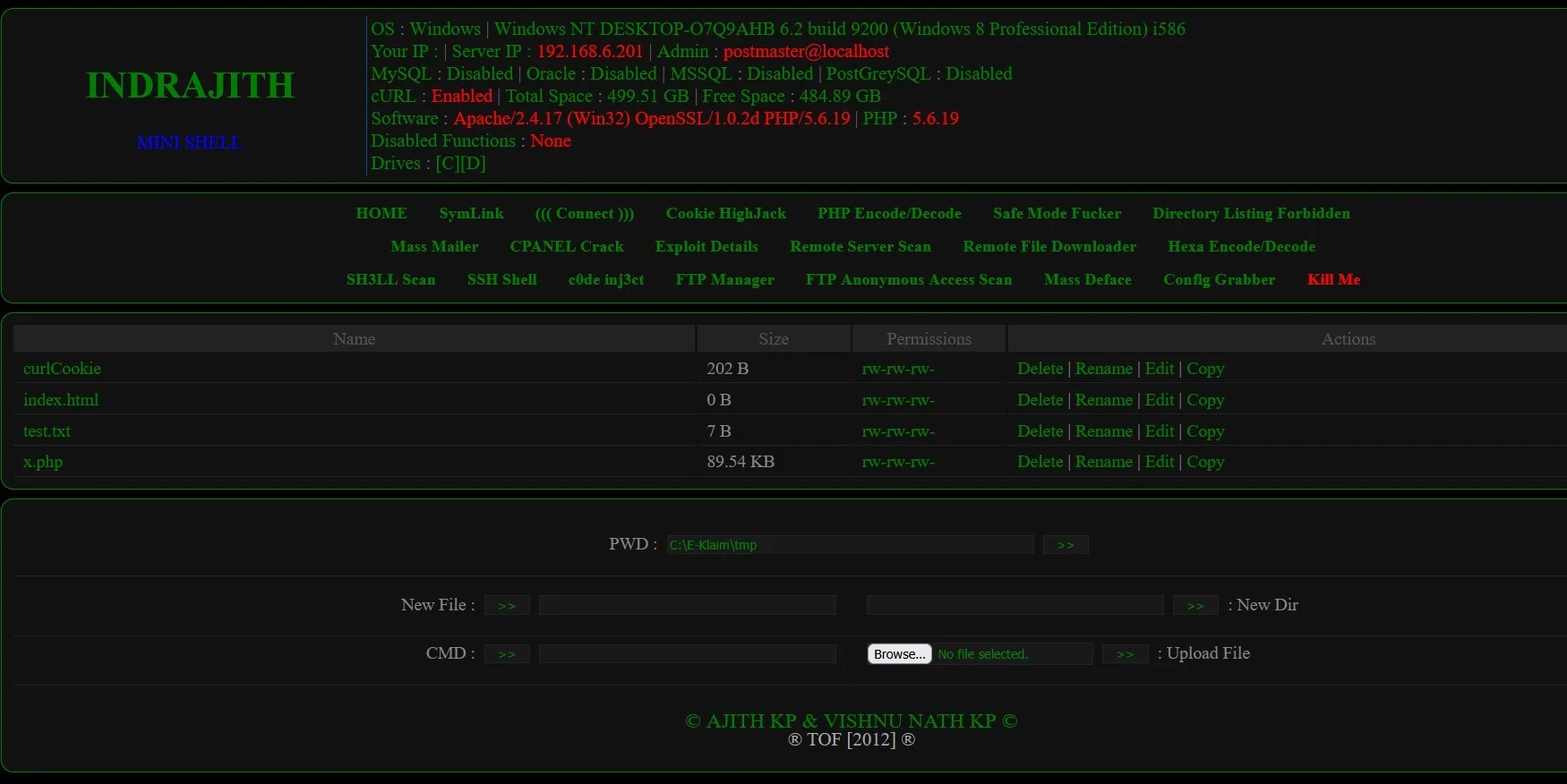
Features
About Indrajith Web Shell Symlink Bypass Tools
The Indrajith Web Shell Symlink Bypass Tools are specifically engineered to facilitate advanced penetration testing and backend server management by exploiting symlink vulnerabilities for ethical hacking purposes. This PHP-based tool is adept at enabling users to conduct a comprehensive security auditing and vulnerability assessment by granting them the capability to execute commands remotely on a server. Its core function lies in its ability to bypass standard security protocols through sophisticated symlink techniques, offering a unique angle in the exploration of server security. The architecture of the tool is designed to be lightweight yet powerful, ensuring minimal impact on the server's performance while providing maximum utility for security professionals in their quest to identify and rectify potential security flaws. Particularly useful in scenarios where standard penetration testing tools fall short, Indrajith Web Shell Symlink Bypass Tools offer an innovative approach to accessing restricted areas of a server, thereby revealing hidden vulnerabilities that could potentially be exploited maliciously. Its integration into security practices underscores the importance of a proactive stance in cybersecurity defense, ensuring that systems are resilient against not only known threats but also against those involving intricate bypass techniques and remote execution tactics. For those engaged in the complex field of cybersecurity, understanding and utilizing such tools under authorized conditions is paramount to maintaining robust digital fortresses in an increasingly vulnerable digital landscape.
WARNING: This tool is provided for authorized security testing and educational purposes only. Deploying on systems without explicit written authorization violates applicable computer fraud laws (CFAA, CMA, StGB §202a, etc.) and may result in criminal prosecution. The user assumes full responsibility for compliance with all applicable laws.